October 30, 2026
Water: The Ingredient You Forget
It is a common human failing to overlook what is most abundant. The Romans built aqueducts across continents because they understood that water, though ordinary, is the foundation of a city. The home brewer commits a smaller version of the same oversight each morning: measuring the coffee with care, choosing the beans with deliberation, and then filling the kettle without a second thought. Yet water is the greater part of the cup. The coffee itself is a small portion, dissolved and carried by the water. Water is therefore not a background detail. It is the principal ingredient.
When one drinks a mug of coffee, one drinks mostly water that has taken up flavour, aroma, and body from the grounds. If that water tastes clean and fresh on its own, it will carry the coffee's flavour cleanly. If it tastes poor on its own, that poor taste will appear in the cup, however fine the beans may be. Hence the plain takeaway of this essay: if your water tastes off, your coffee will too.
The first test is disarmingly simple, and requires no instrument. Pour a glass of the water you brew with, taste it plain, and ask whether you would enjoy drinking it on its own. If the answer is yes, the foundation is sound. If it tastes of a swimming pool, of old pipes, or simply flat and stale, then the water is the place to begin. Correct the water, and the coffee often corrects itself.
What constitutes good brewing water at home? The standard is modest: clean and fresh tasting. No special water is required, and no perfect formula need be pursued. If tap water tastes good to drink, it will generally make good coffee. Begin with the water one already likes to drink.
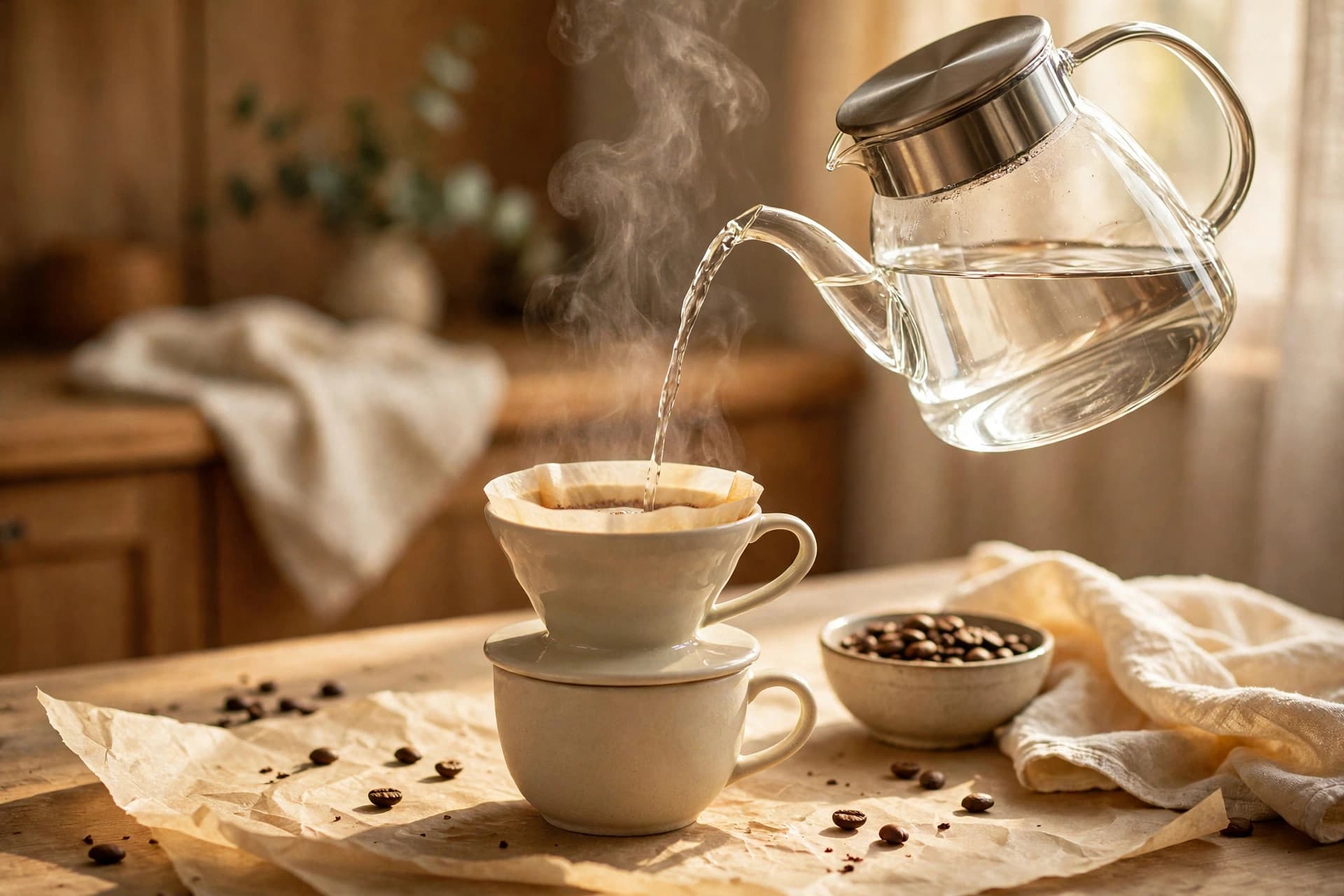
If tap water does not taste good, filtered water is an easy and effective improvement. A simple pitcher filter, or a filter fitted to the tap, removes much of what interferes with flavour — chlorine taste foremost among them — and leaves water that tastes clean and neutral. This single change may accomplish more than a new brewer.
Staleness is a second common fault. Water left sitting in a kettle for days, or in a machine reservoir for a long time, tastes flat. Freshness matters for water just as it does for coffee. Fill the kettle with fresh water each time, rather than reheating yesterday's water again and again. For a drip machine, empty the reservoir, and refill it with fresh water when brewing. Old water, like old coffee oils, lends everything a tired character.
Temperature forms the second half of this subject, and it is no less important than taste. Water too cool will under-extract the coffee, leaving it sour and thin. Water at a rolling boil when it strikes the grounds can scorch the flavour and push the cup toward bitterness and harshness. The customary target is just below boiling, around two hundred degrees Fahrenheit — hot enough to draw out sweetness and body, but not so hot as toburn the more delicate flavours.
A temperature-controlled kettle, set to that range, settles the matter directly. For those without one, the simple method suffices: bring the water to a boil, remove it from the heat, and let it rest for about thirty seconds before pouring. That brief rest brings it into approximately the right range. The exact number need not be pursued anxiously; a few degrees in either direction will not ruin a cup. What matters is avoiding the extremes — neither barely warm water nor water at a hard boil poured directly onto the grounds.
Temperature also interacts with grind and brew time. Cooler water extracts more slowly; hotter water extracts more swiftly. This is one more reason to change one variable at a time when diagnosing a cup. To alter temperature and grind on the same day is to forfeit knowledge of which change was responsible.
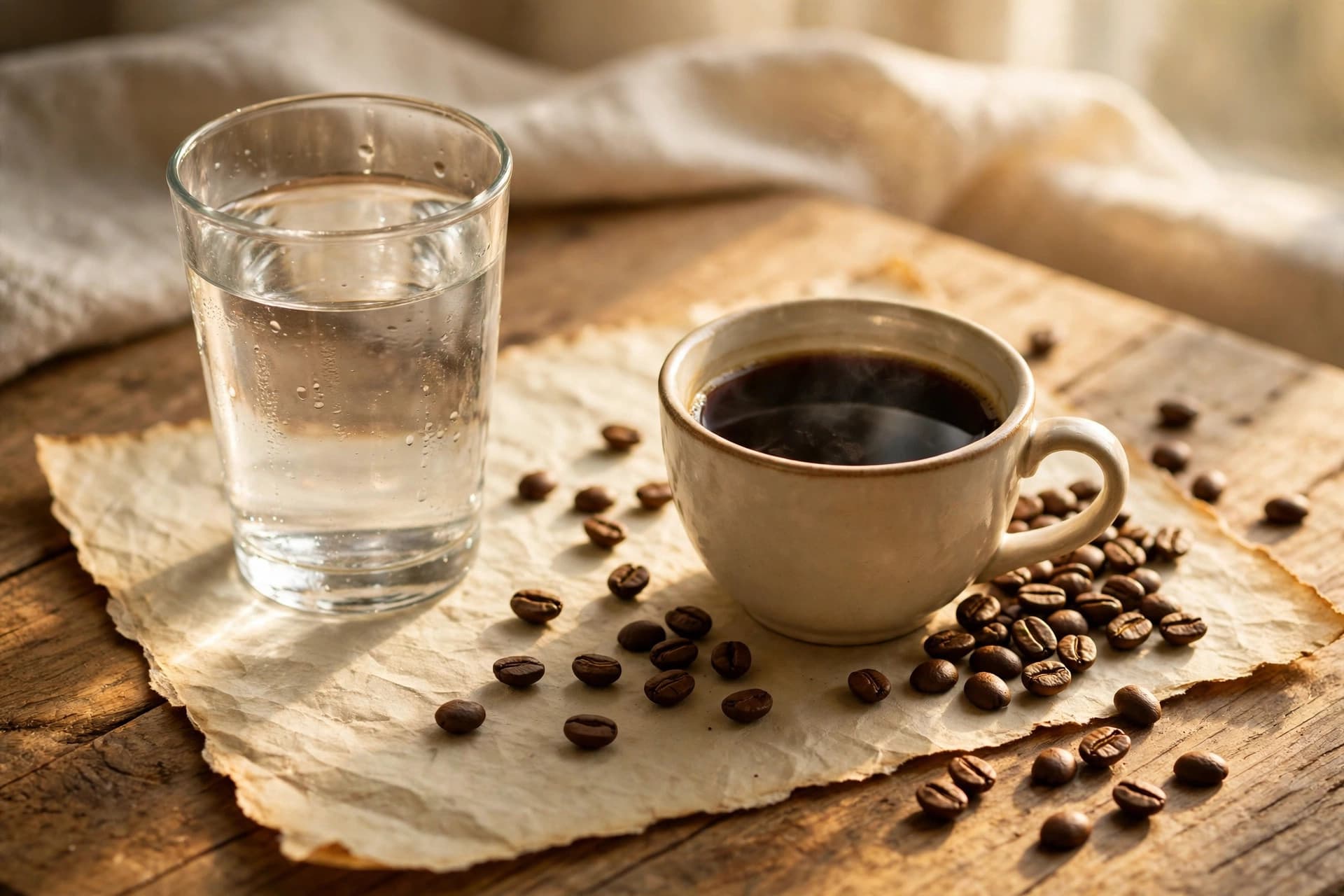
A practical morning routine may be stated briefly. First, fill the kettle with fresh water of a kind one would enjoy drinking plain. Second, if tap water tastes off, use filtered water instead. Third, bring it to a boil, let it rest about thirty seconds, and pour. Fourth, brew as usual, and taste. If the cup tastes cleaner and sweeter than before, the water habit is worth keeping. If the cup still disappoints, grind, freshness, or brew time may then be examined one at a time, with water no longer the hidden fault.
Finally, a myth must be dismissed. Some suppose that because coffee is strong and dark, it can conceal poor water. It cannot. Coffee flavour is delicate even in a bold cup, and poor water does not vanish into coffee; it travels with it.
At Holy Roastin' Empire, this is considered from the roasting side as well. Every bag is roasted fresh to order, because freshness matters from the start. Yet even the freshest beans cannot outrun water that tastes off. Good beans and good water belong together; either alone leaves half the cup behind. Like the aqueduct and the city it served, the unglamorous foundation determines whether the finer work above it can flourish.