November 1, 2026
Tasting Like a Pro at Home
Professional tasting is often imagined as a forbidding ceremony, reserved for experts with a private vocabulary. In truth, it is something far more democratic: the practice of noticing more, slowly, and with a few simple tools. The taster requires nothing beyond what the home brewer already possesses — a nose, a mouth, and a little attention. The Roman orator was trained first to observe before speaking; the coffee drinker may adopt the same order, observing before judging, and the cup will repay the patience.
The takeaway of this essay may be stated at the outset, so that the reader may proceed without anxiety: there is no wrong palate, only noticing more. One need not discover the same flavours another person discovers. One need only notice what one notices, and find a few words for it, so that it may be remembered and brewed toward the next time.
What professional tasters actually do is called cupping, and it is simpler than its name suggests. Hot water is poured over ground coffee, the grounds are allowed to steep, the crust that forms upon the surface is broken, the residue is skimmed away, and the coffee is tasted by slurping it from a spoon. Each part of the ritual has a purpose, and the purpose is focus. Cupping sets aside the brewer, the milk, and the sugar, leaving only coffee and water, so that attention may rest upon the coffee itself.
At home, no formal cupping is required: its method may be borrowed for an ordinary morning brew, or for two coffees side by side, where comparison makes differences easier to notice.
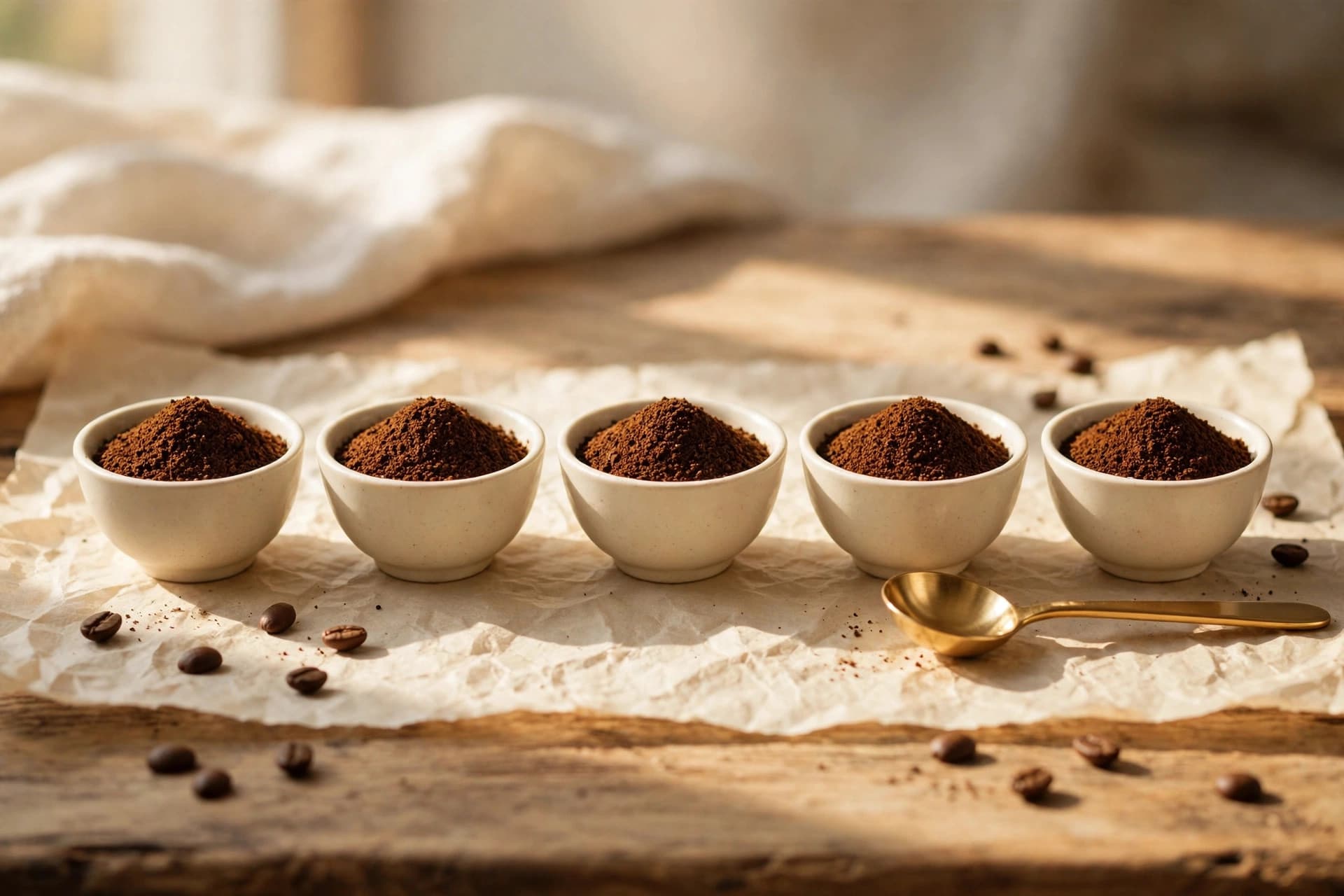
The first step is smell. Before brewing, smell the dry grounds: is the first impression sweet, fruity, nutty, floral, or earthy? After brewing, smell the cup again — hot water will have unlocked new scents. Aroma constitutes a great part of flavour, and smelling before and after brewing teaches how much of taste truly begins in the nose.
The second step is the slurp. Slurping sprays the coffee across the whole palate and mixes in a little air, which allows more to be tasted. A gentle slurp, letting the coffee coat the mouth before swallowing, reveals far more than a cautious sip, and slowing down permits sensations in different parts of the mouth to be caught.
The third consideration is sweetness, the backbone of a good cup. Sweetness in coffee does not mean added sugar; it means a natural, pleasant sweetness, akin to caramel, honey, or ripe fruit. A sweet, smooth cup is a favourable sign. A sharp or hollow cup, with no sweetness to round it, may be under-extracted, and a finer grind or hotter water may help.
The fourth consideration is brightness: the lively, juicy quality in coffee, sometimes called acidity; here, the term describes a sensory quality, not a claim about digestive effects. Think of a fresh apple, or a squeeze of lemon in water — a pleasant sparkle that awakens the cup. A bright cup feels clean and energetic; a flat cup feels dull. Neither is wrong, and discovering one's own preference is part of learning one's palate.
The fifth consideration is body: how the coffee feels in the mouth, its weight and texture — light and tea-like, medium and smooth like milk, or heavy and full like cream. Body is not strength: a light-bodied coffee may still be flavourful, and a heavy-bodied coffee may still be gentle. Attend to what follows swallowing: does the feeling linger, or clear quickly?
The sixth consideration is finish: what remains after swallowing. A clean, sweet finish is among the best signs of a well-brewed cup. A harsh finish often indicates over-extraction, and a coarser grind may help; a finish that vanishes too quickly may indicate under-extraction, or beans past their freshest.

These observations compose a simple household routine. Brew as usual. Smell the grounds, then smell the cup. Slurp, let the coffee coat the mouth, and ask, in order: Is it sweet? Is it bright? How does it feel in my mouth? And what remains after I swallow? One need not answer all of these perfectly. To notice one or two is the victory. Today one notices sweetness; tomorrow, brightness; next week, body. That slow accumulation is exactly how a palate grows. There is no examination at the end, and no wrong answer.
If tasting with another person, share observations without correcting one another: one may perceive fruit and another caramel, and both may be right. Begin with plain words — sweet, bright, smooth, heavy, clean, harsh, pleasant. Those words are sufficient, and they are honest.
At Holy Roastin' Empire, this part of coffee is cherished, for it joins the roasting to the drinking. Every bag is roasted fresh to order, so the flavours one is learning to notice begin from a fresh, lively place. Fresh beans give the palate more to work with, and tasting gives reason to slow down and enjoy them.
Smell, slurp, and notice. There is no wrong palate, only noticing more — and the cup, attended with Roman steadiness, will reveal more than haste ever allowed it to.