November 5, 2026
Roast Profiles, In Depth
Roasting is often spoken of as merely a matter of colour: light, medium, or dark. In truth, it is a sequence of judgments, each trading one quality for another. To understand roast profiles is to follow a bean through heat and crack, and to see what the roaster gains and surrenders at each stage. Like a Roman craftsman shaping raw material, the roaster does not invent flavour from nothing. The roaster decides which flavours already present shall be brought forward, and which shall recede.
A green bean is dense, pale, and grassy in aroma. It holds water and the raw materials of flavour, but it does not yet taste like coffee. In a hot drum or hot-air roaster, the beans first take in heat quietly. Moisture leaves, and colour shifts from green to yellow. This drying phase lacks glamour, yet it governs all that follows. Beans dried unevenly will roast unevenly, so a careful roaster allows time for them to warm through.
As heating continues, the beans turn tan, then light brown, and sugars within them begin to caramelise. Hundreds of aroma compounds form at the same time: the compounds that will later appear as fruit, sweetness, or roastiness. Then comes first crack, a series of pops as pressure inside the bean releases and the bean expands, not unlike popcorn. First crack marks the point at which the bean has become drinkable. Its structure has opened, its coffee has developed enough to brew, and its flavours are bright, lively, and closely tied to the bean itself.
A roaster who stops soon after first crack produces a light roast: light brown, comparatively dense, and somewhat smaller than a darker roast of the same coffee. Brightness leads in the cup, body is lighter, and flavours point back to where the coffee grew. This is the central virtue of light roast: the farm still speaks loudly. More original character survives, including fruit, floral notes, and a lively acidity that reads as juicy rather than sour.
Beyond first crack, every step is a trade. The bean loses moisture, expands, and develops sugars. Brightness softens, sweetness grows, and body becomes rounder and fuller. This middle stretch is medium roast: a richer brown, a still-dry surface, and a balanced cup. Brightness has stepped back, sweetness has stepped forward, and roast flavours have joined without dominating. Medium roast is where many home brewers settle, with good reason. It is forgiving, works in a drip machine, a pour over, and a French press, and offers sweetness and familiarity while still permitting a taste of the bean beneath.
Past medium lies medium dark. The bean grows darker brown, and small spots of oil may appear. Roast flavours become clearer — cocoa, toasted nuts, and a deeper, darker sweetness — while brighter notes fade. Medium dark sits past the middle, leaning toward the roast, yet the bean has not vanished. One coffee may still be told from another, even if differences are less sharp than at light roast.
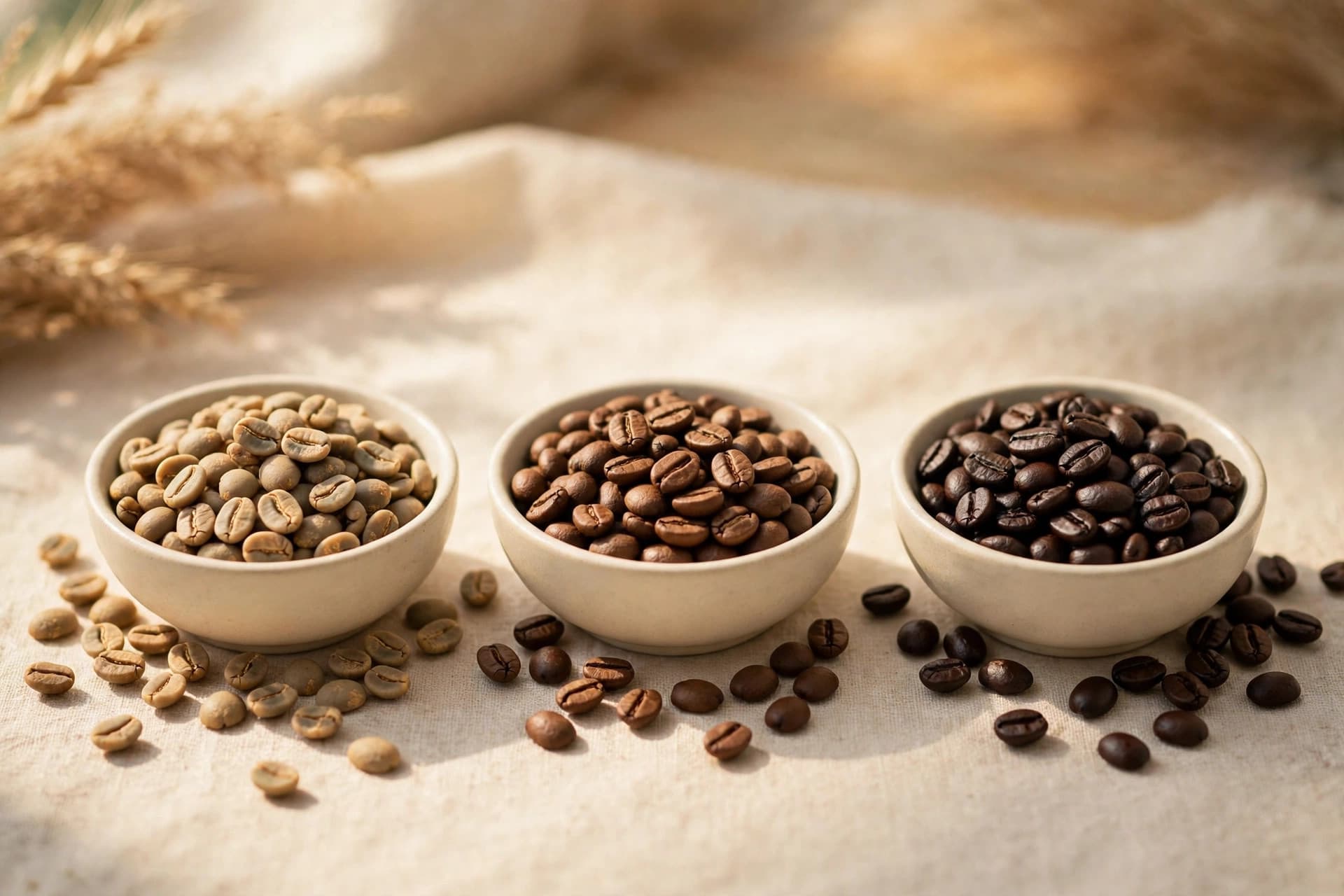
Further still lies dark roast: dark brown beans, often glossy with oil, larger and lighter than at the start. Roast flavours now lead — smoke, dark chocolate, and a heavy, full body — while brighter, fruitier notes have largely stepped back. In this stretch sounds a second crack, a quieter, faster crackling. Roasters heed it as a warning, for beyond second crack the roast moves swiftly toward very dark territory, where burnt, ashy, or bitter flavours grow likely. Dark roasting therefore demands judgment. Stopped too early, the coffee may taste underdeveloped; carried too far, it may taste charred.
The Three Realms, one of Holy Roastin' Empire's signature blends, built from Brazil, Peru, and Guatemala beans, illustrates this choice clearly. Drinkers often notice stone fruit, dark cacao, and a wild floral note, clearest when the roast permits the beans to speak. Roasted darker, the balance shifts: stone fruit softens, the floral note steps back, and dark cacao grows bolder and roastier. The coffee is not diminished; it is a different expression of the same beans. The same coffee may likewise taste different from two roasters, each favouring a different balance; the drinker's taste adjudicates between them.
At home, observe before memorising. Ask three questions of a new coffee. Is brightness forward, or has it softened? Is sweetness light and fruity, or deep and chocolatey? Does the cup feel light and lively, or heavy and roasty? The answers place the coffee upon the scale and suggest what to try next. If light roast feels too sharp, try the same kind of coffee at medium. If bold and heavy flavours appeal, try medium dark before leaping to dark, so the bean may still be heard beneath the roast. Dark roast does not mean stronger in caffeine; roasting removes only a tiny amount. What changesis flavour and body.
The takeaway is a matter of balance, stated plainly: roast level shifts balance from bright and fruity to sweet and round to bold and roasty. The roaster is not merely selecting a colour, but choosing which flavours to highlight, which to soften, and how much of the farm the drinker will still taste in the cup.
At Holy Roastin' Empire, every bag is roasted fresh to order, so the profile the roaster chose reaches the cup undimmed, rather than as a faded version of itself.
The coffees in this note
The Three Realms — Brazil • Peru • Guatemala — medium-dark