October 29, 2026
Grind Size, In Depth
The Romans understood that great work is seldom accomplished by force alone. It is accomplished by discipline, by the careful adjustment of instruments, and by the patience to observe the result before acting again. The home brewer would do well to adopt the same disposition. Among all the variables in brewing, grind size is the dial most readily turned, and the one that most directly shapes the cup.
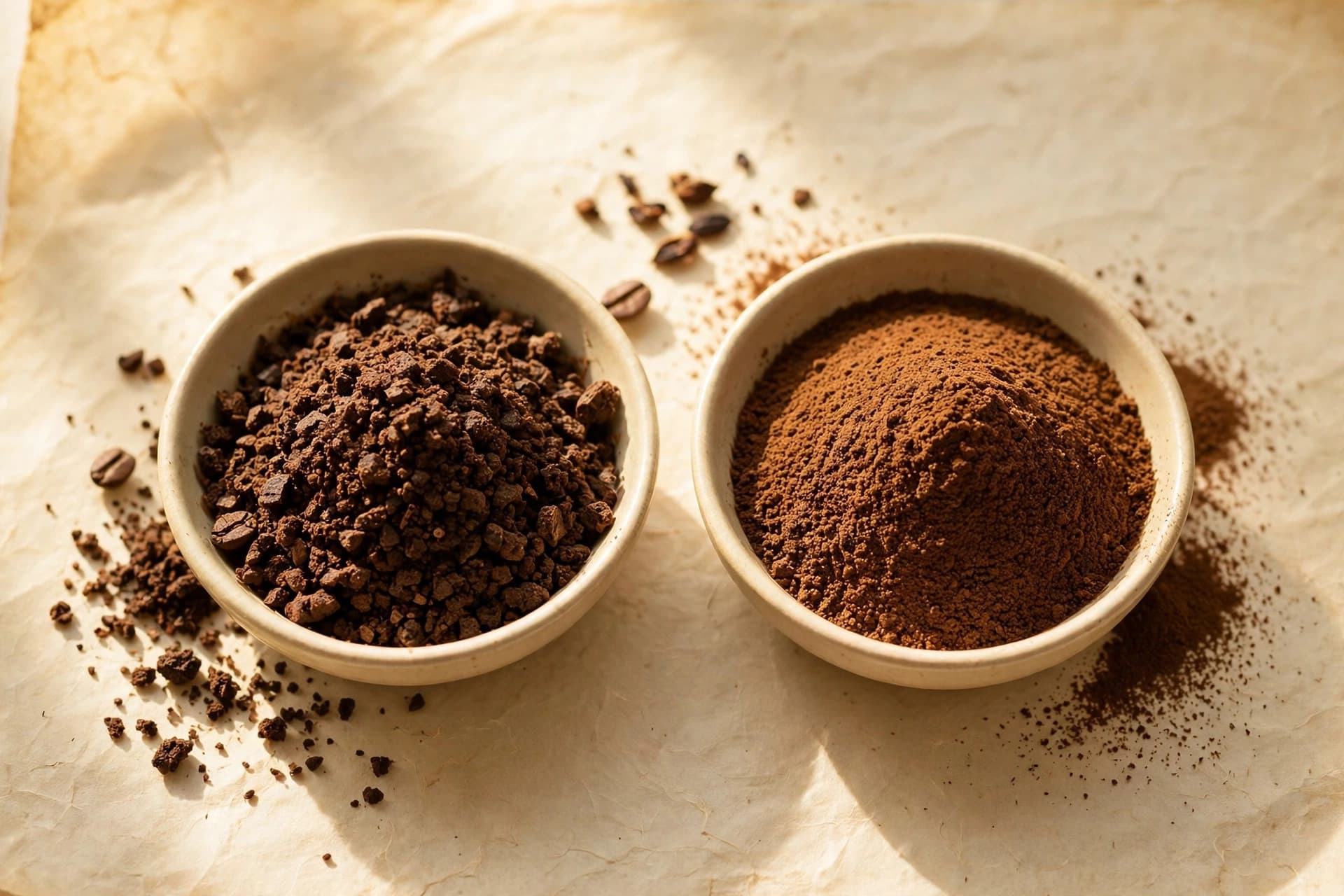
The principle rests upon surface area. A whole bean presents only a small surface area to water. Once ground, that bean is broken into many pieces, and water can reach far more of the coffee at once. The finer the grind, the greater the surface area; the coarser the grind, the less. Surface area, in turn, governs speed. Fine particles surrender their flavour quickly, because water touches so much of them at once. Coarse particles surrender it slowly, because water touches so little.
Consider sugar: a single cube dissolves slowly, while the same quantity, crushed fine, dissolves swiftly. The difference lies not in the sugar itself, but in how much of it the water can reach. Coffee behaves in like manner. Grind size determines how swiftly water can perform its work, and therefore grind and brew time must be matched.
A short brew requires a fine grind, for the water has little time to work. Espresso, forced through the grounds in well under a minute, demands fineness. A pour over, passing through over a few minutes, calls for a medium-fine grind — fine enough to give the water ample material, yet not so fine that the flow stalls or turns harsh. A standard drip machine suits a medium grind, comparable to ordinary sand. A French press, in which coffee steeps for about four minutes, requires a coarse grind, like coarse sea salt, so that the long contact yields sweetness rather than muddiness. Cold brew, steeping for many hours, requires an extra-coarse grind, like cracked peppercorns; with so much time, even coarse particles give generously, and a finer grind would give far too much.
Grind is not merely a setting, however. It is a diagnostic instrument. When a cup disappoints, the fault often declares itself in one of two directions, and each points to a different remedy.
Sourness is the first. A sour cup tastes sharp, thin, or puckery, sometimes salty or hollow, as though something were missing from its centre. In home brewing, this most often signifies under-extraction: the water has not drawn enough flavour from the grounds. The remedy is to grind one step finer, giving the water more surface to work upon in the same span of time.
Bitterness is the second. A bitter cup tastes dry, harsh, or astringent, coating the back of the mouth and lingering unpleasantly, sometimes ashy or burnt even when the coffee was well roasted. This most often signifies over-extraction: the water has drawn too much. The remedy is to grind one step coarser.
Here lies the central discipline of this essay, and its takeaway: change one variable at a time. Brewing involves several forces — grind, water temperature, brew time, and the amount of coffee — and each pulls the cup in its own direction. To alter three at once and then taste improvement is to learn nothing, for one cannot know which change helped. To taste deterioration is equally uninformative. Choose one dial, move it slightly, and taste. If grind is the subject of inquiry, hold temperature, time, and dose constant. Move the grind a single step, brew, and observe. This is how a brewer learns his own equipment, rather than merely following a chart.
A further matter deserves attention: consistency. Grind size functions as a reliable dial only when the grinder produces particles of roughly uniform size. A grinder that yields a mixture of powder and large fragments will cause the water to over-extract the powder and under-extract the fragments simultaneously, and the cup may taste both bitter and sour at once. That mingled fault is itself a clue. When no single adjustment resolves it, the difficulty may lie not in the setting but in the evenness of the grind.
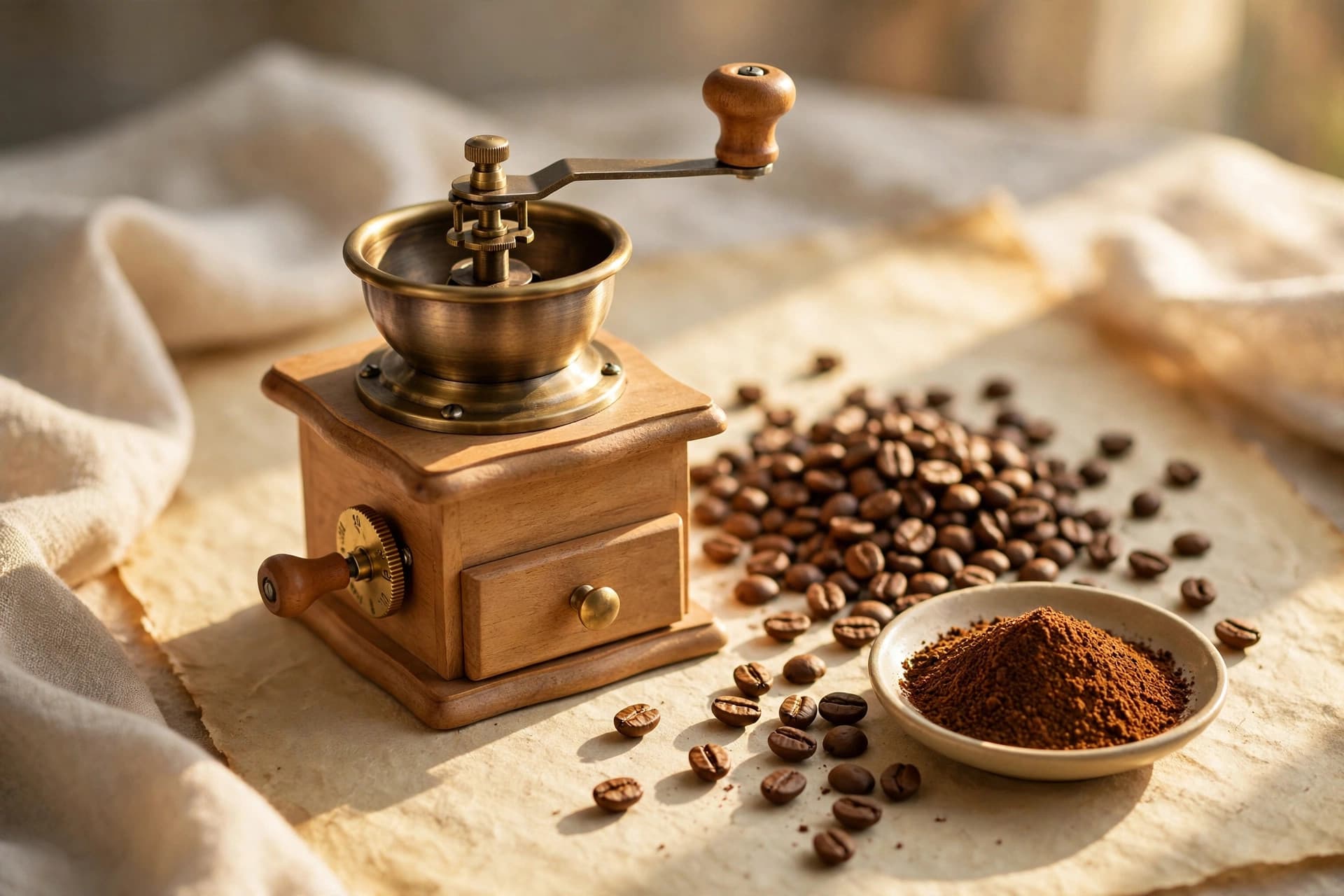
A burr grinder, which crushes beans between two surfaces, generally produces a more even grind than a blade grinder, which chops them unevenly. A blade grinder is a respectable place to begin. When the time comes, however, moving to a burr grinder is among the most useful improvements a home brewer can make, precisely because it renders the grind dial trustworthy.
A simple routine follows. First, taste and name the fault: sour and thin, or bitter and harsh? Second, move the grind one small step in the proper direction — finer for sourness, coarser for bitterness. Third, change nothing else, brew again, and taste. If the cup emerges balanced and pleasant, leave the grind alone; there is no need to chase a perfect setting.
One qualification remains. Grind cannot rescue stale coffee. At Holy Roastin' Empire, every bag is roasted fresh to order, so the beans a brewer grinds begin from a sound foundation. Fresh beans, a steady grind, and one change at a time will carry a brewer further than any collection of apparatus. The Roman virtue of constancy — steady, repeated, attentive practice — is, in the end, the whole of the method.