October 24, 2026
French Press, Done Right
The French press suffers from a reputation it does not deserve. In many kitchens it sits retired in a cabinet after gritty, muddy, bitter cups, and the fault is assumed to be the brewer's. It is not. Done right, French press coffee is full and sweet, with a round, satisfying body — rich, yet clean enough to invite another sip. The difference is usually a small matter of grind, time, and patience.
The press is a tall vessel, glass or metal, with a plunger and fine mesh filter. Ground coffee and hot water steep together, then the plunger holds the grounds back while the coffee is poured. That steeping defines the method: where a drip machine passes water through coffee once, the press keeps coffee and water together, so flavour builds slowly. That explains both its fullness and its unforgiving side — a small error, steeped for minutes, grows strong.
For the French press, the grind must be coarse — like coarse sea salt, in small, even grains, not powder or fine sand. This matters twice over. First, the filter: too fine a grind slips through the mesh into the cup, and that sediment is the source of most grit — grounds too small for the filter that holds them. Second, time: steeping for about four minutes, a fine grind would present too much surface area for too long, drawing out bitter flavours with the sweet ones. A coarse grind slows extraction, so four minutes yields sweetness and body rather than harshness.
Use fresh whole bean coffee when possible, ground coarse just before brewing. At Holy Roastin' Empire, every bag is roasted fresh to order, so the brewer starts with coffee whose sweetness is still intact, and grinding fresh preserves it.
A sound starting ratio is about two tablespoons of whole bean coffee, ground, for every six ounces of water, scaled up in the same balance for a full press. It is a starting point, not a decree. If the cup tastes thin, add a little more coffee next time; if too heavy, use a little less. Change one thing at a time, and taste the change, so the palate learns what it prefers.
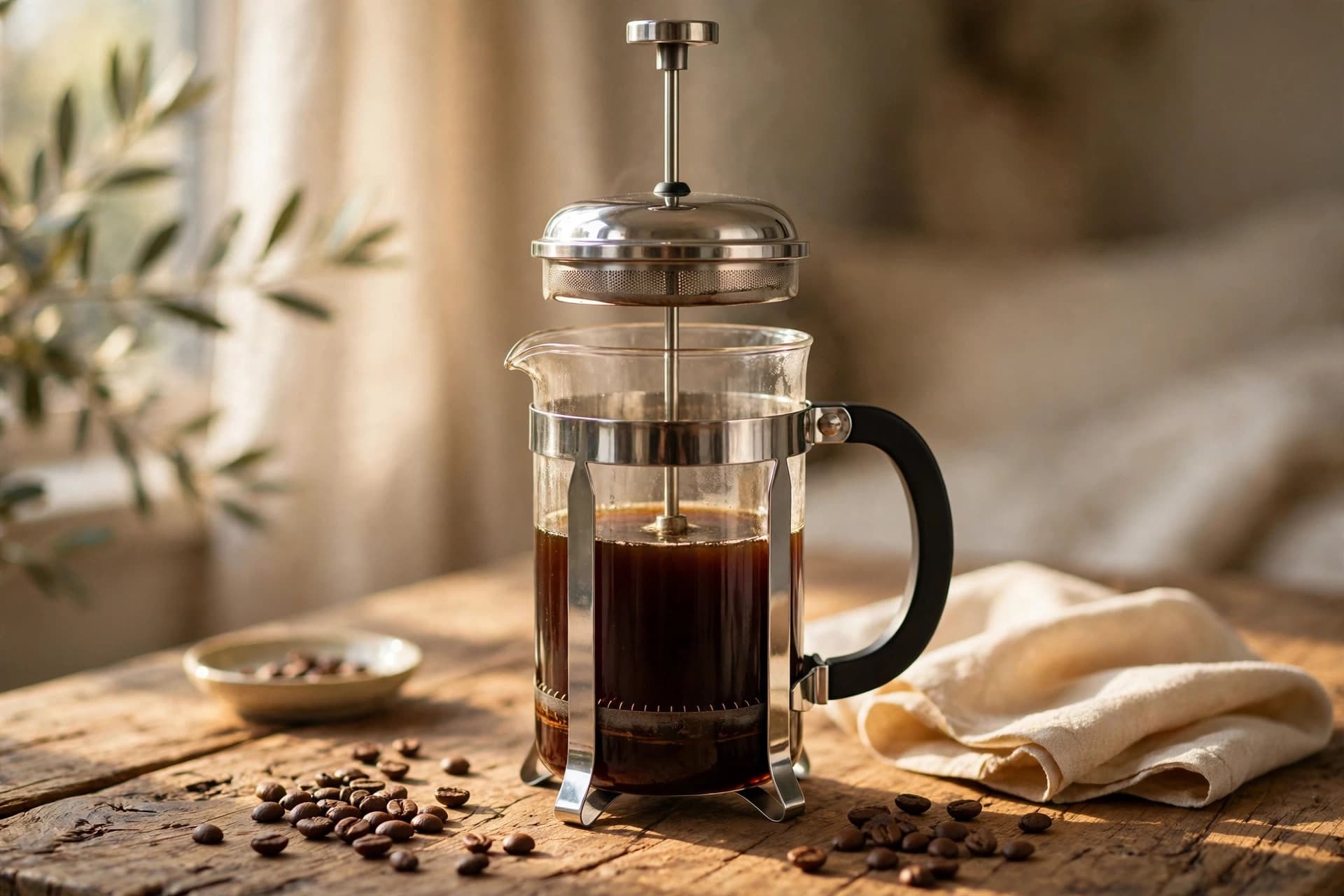
Water should be just below boiling, around 200 degrees Fahrenheit. Without a temperature-controlled kettle, bring the water to a boil and let it sit about thirty seconds. That is close enough for an excellent home cup.
Pour the water over the grounds slowly and evenly, stir gently to break up dry clumps, place the lid on with the plunger up, and steep four minutes. Set a timer: guessing at four minutes commonly becomes two or seven.
When the time is up, comes the step most brewers skip. Lift the lid: a crust of grounds has floated up. Break it gently with a spoon and skim off the grounds and foam on top. That crust holds finer grounds and bitterness that would otherwise reach the cup. Skimming takes about thirty seconds and leaves a cleaner, sweeter brew.
Replace the lid and press slowly, straight down, with steady, gentle pressure. Pressing hard and fast pushes fine grounds through the mesh and stirs up sediment; pressing slowly lets the filter do its work. When resistance is felt near the bottom, stop. Then pour right away — left sitting on the grounds, the coffee will keep steeping and turn bitter.
If the cup is gritty, examine the grind first: make it coarser, press more slowly, and skim well. Those three corrections resolve most gritty cups. If it is bitter, examine time and temperature: did it steep much longer than four minutes, was the water actually boiling when poured, or was the coffee left sitting in the press after pressing? Any one of these can push a sweet cup toward bitter.
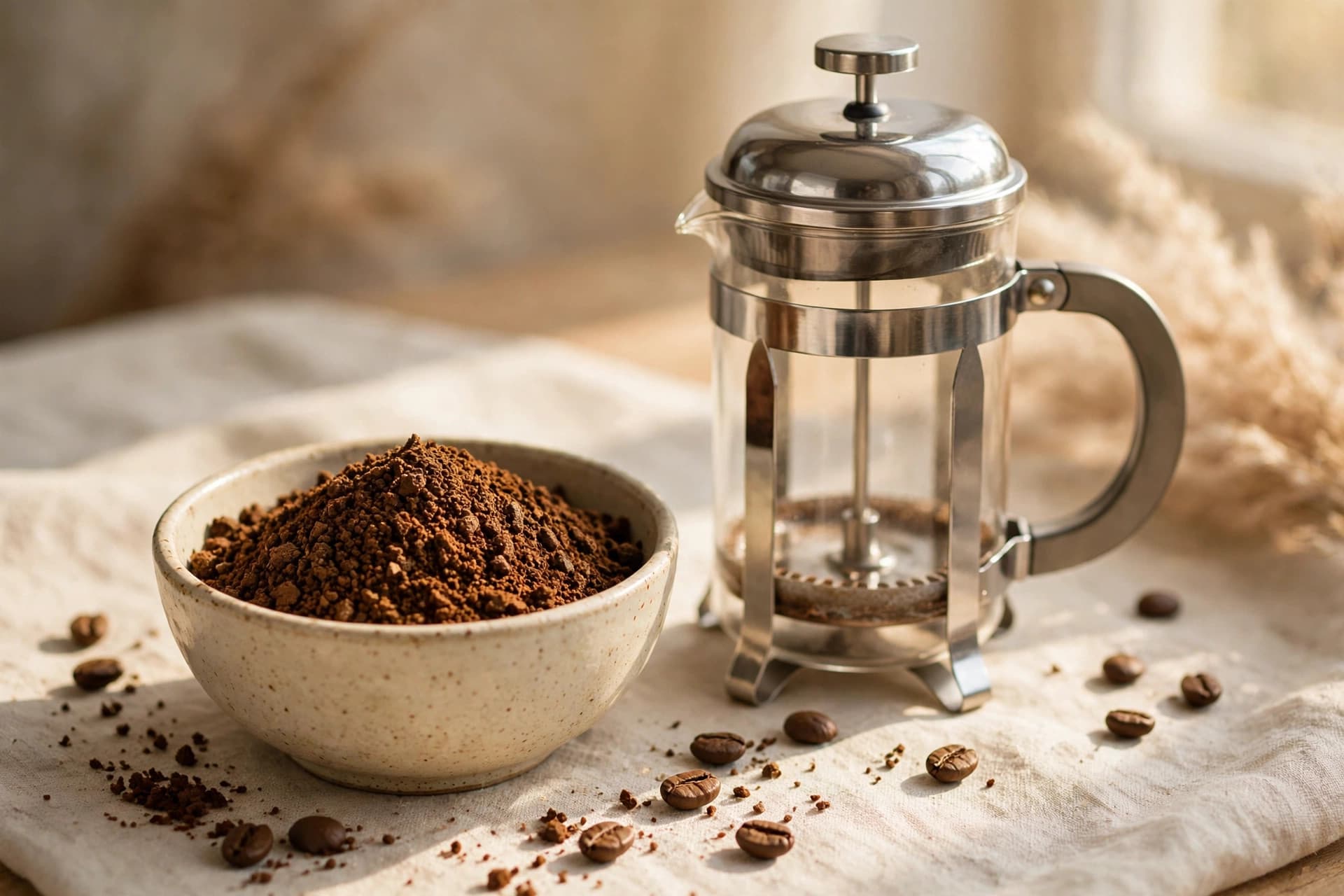
If the cup tastes sour or thin, it may be under-extracted. Try a slightly finer grind, still on the coarse side, confirm the water was hot enough, and confirm enough coffee was used. If it tastes flat, examine freshness: coffee ground weeks ago, or stored open on a shelf, loses sweetness first. Fresh whole bean coffee, ground just before brewing and stored in an airtight container in a cool, dark place, will taste livelier in a French press than stale coffee will in any brewer.
Cleanliness belongs in the same discipline: rinse the press after each use and wash the mesh filter regularly, for old coffee oils turn rancid and make everything taste off. A clean press is a sweet press.
The method, restated plainly: coarse grind like coarse sea salt; fresh coffee at about two tablespoons per six ounces of water; water just below boiling; pour, stir gently, steep four minutes, break the crust, skim, press slowly, and pour right away. Done a few times, it becomes easy morning habit.
The takeaway: French press should be full and sweet, not gritty and bitter, and the difference is usually grind, time, and a slow press. Try one change first — the grind, or the skim — and taste what changes. The brewer nearly given up on may become a favourite.