October 25, 2026
Drip Machine, Done Right
The drip machine is the brewer most homes already own, and the most often underestimated. Because it works automatically, it is easy to assume good coffee must come from a newer machine. Often it does not. A basic drip machine can make a genuinely good cup. What it requires is not new equipment, but good habits — and good habits beat a new machine.
The drip machine heats water, drips it over ground coffee in a filter, and lets the brewed coffee fall into a pot below. It is simple, automatic, and forgiving, which is why it endures in so many kitchens — and easy to take for granted. Because the machine does the work, the temptation is to scoop in whatever coffee is at hand and press start. The difference between adequate coffee and good coffee lies in the small choices made before the button is pressed.
Buy whole bean coffee in amounts to finish within a couple of weeks, and grind it just before brewing. Pre-ground coffee open for weeks loses sweetness and aroma no machine can restore. At Holy Roastin' Empire, every bag is roasted fresh to order, so freshness is a habit the brewer can build on rather than chase. Store beans in an airtight container in a cool, dark place, away from heat and light; an ordinary kitchen counter serves well.
For a standard drip machine, use a medium grind, like regular sand — not fine like powder, and not coarse like sea salt. Medium gives the water the right amount of surface area for the time it spends passing through the grounds. Too fine, and the water moves slowly and draws out bitter flavours. Too coarse, and it rushes through too quickly, leaving the coffee thin or sour. Medium is the sound starting point for mostdrip machines.
Ratio is the balance of coffee to water. A good starting point is about two tablespoons of whole bean coffee, ground, for every six ounces of water, scaled up in the same balance for a full pot. Consistency matters as much as the ratio itself. Many brewers measure water by the lines on the pot and coffee by a scoop that is not quite the same size each morning, then wonder why the coffee never tastes the same twice. Choose one scoop, use it the same way each time, and adjust slowly. If the cup tastes weak, add a little more coffee next time; if too strong, a little less. Taste is the final judge.
Before adding the coffee, place the paper filter in position and rinse it with hot water, then discard the rinse water. Pre-wetting washes away any papery taste from the filter, so it does not reach the cup, and it warms the brewer and pot, so the coffee stays hotter and tastes better for longer. A reusable metal filter needs no rinse in the same way, but it should still be rinsed clean after each use, so old grounds and oils do not accumulate. A clean filter, paper or metal, is part of a clean cup.
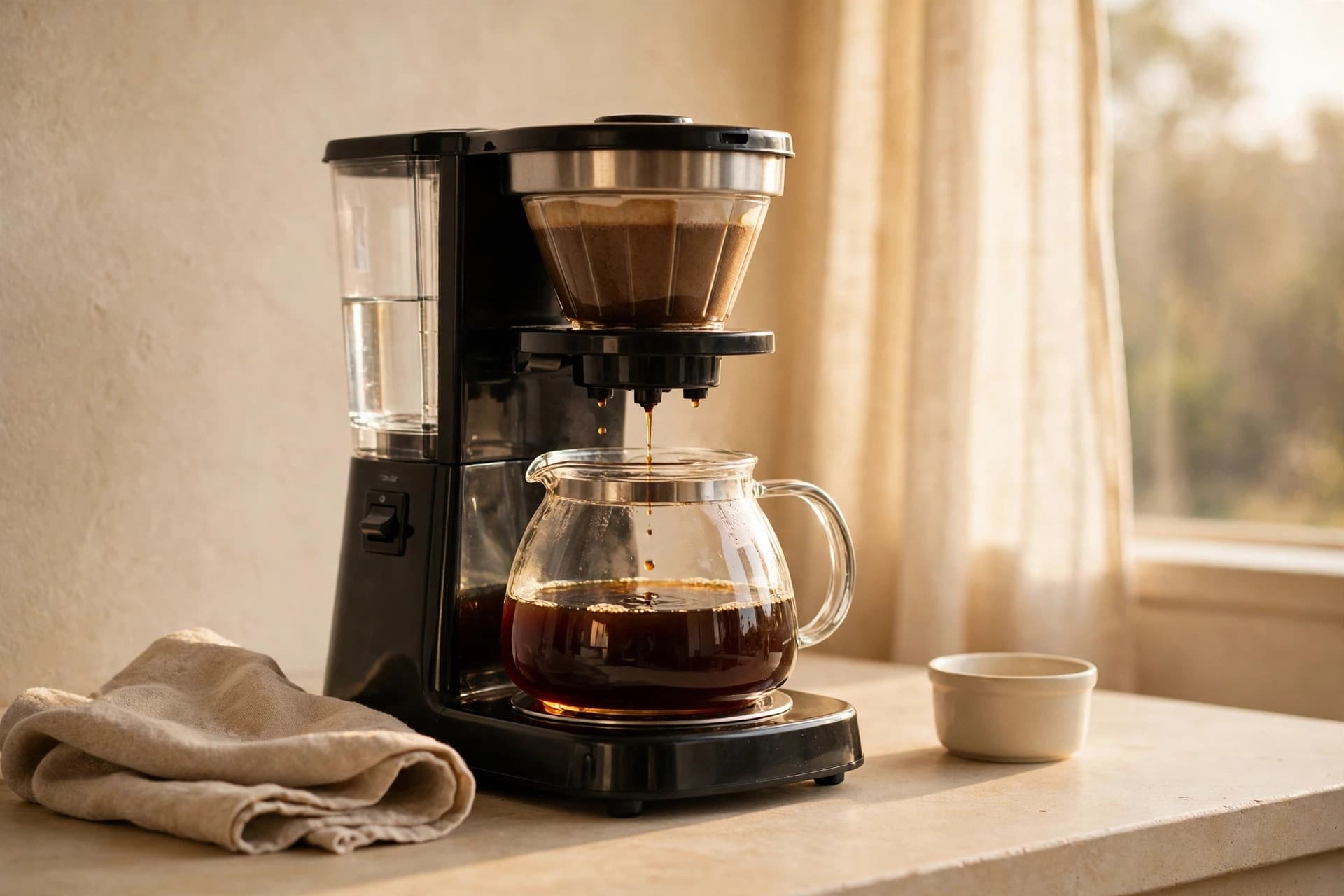
Use clean, fresh-tasting water. If tap water tastes good to drink, it will usually make good coffee. If it tastes off, or strongly of chlorine, filtered water is an easy upgrade — and it costs far less than a new machine. Temperature is largely handled by the machine, one of the advantages of drip brewing, but the starting water should be fresh and cold, not water that has sat in the tank for days.
Coffee oils build up inside a drip machine and over time turn rancid, making everything taste flat or stale even when the beans are fresh. Rinse the pot and filter basket after each use, wipe down the parts within reach, and run a cleaning cycle when the maker recommends it. It is unglamorous work, and among the highest-return habits in home coffee. Scale deserves the same attention, especially in hard-water households: it can slow the water, change the temperature, and make the brew uneven.
Three mistakes undo more drip coffee than any machine flaw: stale, pre-ground coffee in a dirty machine; guessing at the amount, a heaping scoop one day and a flat scoop the next; and leaving brewed coffee on a hot plate for hours, which cooks it and turns it bitter. If coffee must be kept, pour it into a thermal pot or mug soon after brewing; a thermal carafe preserves flavour far better than a hot plate.
None of these habits requires a new machine, a new grinder, or any new purchase beyond, perhaps, a bag of fresh beans and a little morning attention. Try one habit first, not all six at once — fresh grinding, pre-wetting the filter, or measuring the same way every time — and taste the difference. Add another the following week.
The takeaway stands as a principle of household economy as much as of brewing: good habits beat a new machine, and they cost almost nothing.