November 3, 2026
Decaf, Done Right
Let the principle be stated plainly at the outset, as a matter of order rather than of opinion: decaf deserves the same care as any other coffee. Not lesser care. Not a diminished cup, offered with apology. The same care.
Too often decaf is spoken of as though it were real coffee with something removed, and therefore incapable of being good. That is a poor way of reasoning. A drinker who expects little will prepare carelessly, and the careless preparation will then confirm the low expectation. The circle ought to be broken at its first link.
The proper question is not what decaf lacks. It is what a good decaf ought to taste like, and how it ought to be brewed at home. The answer is the same as for any coffee. It should smell good before brewing. It should taste sweet and balanced. It should finish pleasantly after swallowing. If it does these things, it is good coffee, without qualification.
The example before us is Charles V, a single-source Colombian decaf from Holy Roastin' Empire. Colombia is the source, and that is the fact to hold. Beyond it, judgment must proceed as for every coffee: by flavor, not by what the coffee is presumed to be missing.
The reasons people choose decaf are ordinary and sensible. Some love coffee flavor in the evening, but do not wish caffeine late in the day. Some are sensitive to caffeine, yet still desire a proper morning cup. Some simply wish for a second or third cup without further consideration. None of these implies a settlement for less. To desire coffee flavor without caffeine as the point of the cup is a choice, and a good decaf honors that choice.
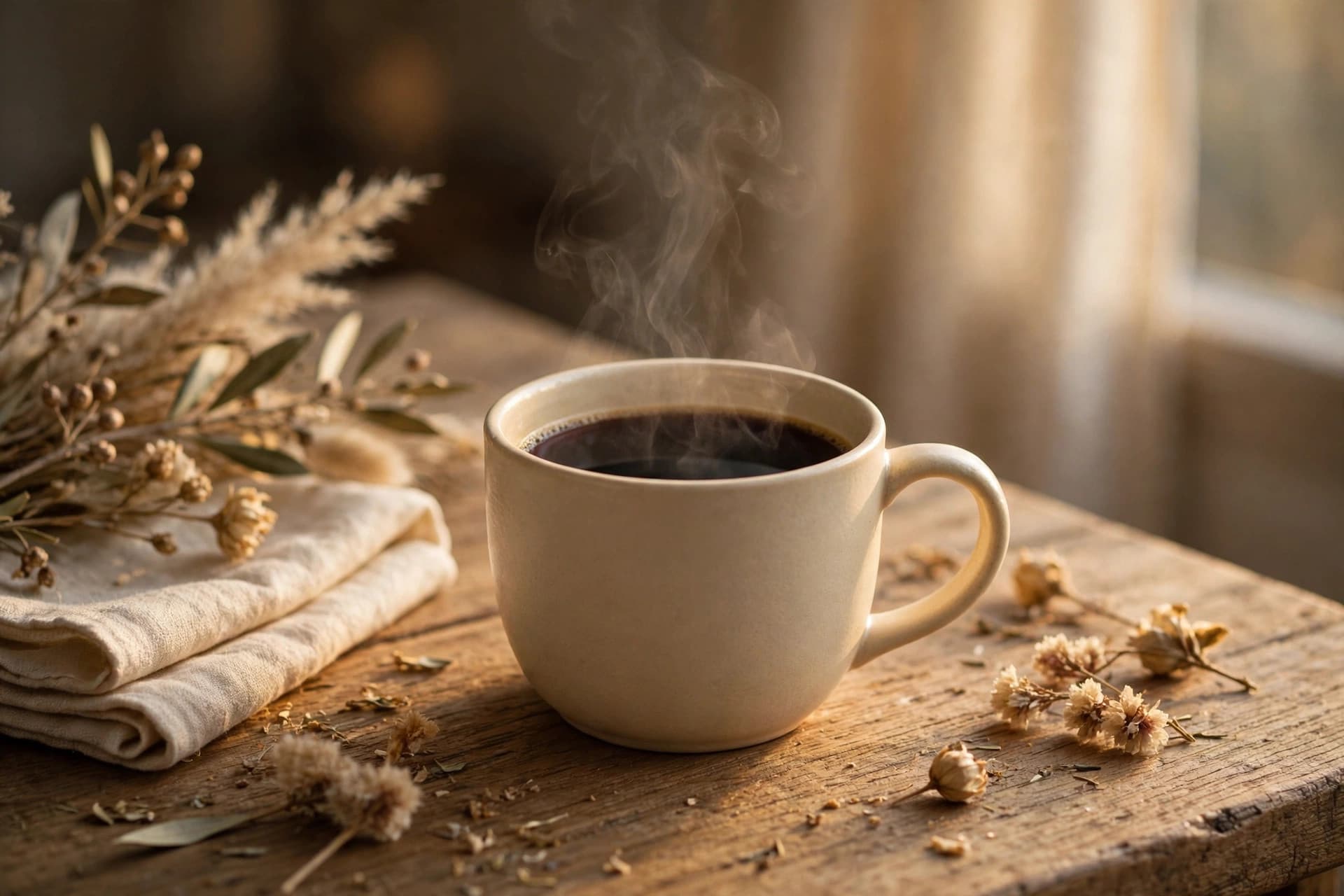
Where decaf most often fails at home, the cause is not mysterious. It is bought stale, or bought pre-ground and left open for weeks, or brewed carelessly because the brewer assumes it will not taste good in any case. Yet the same treatment would ruin any coffee. Stale beans make a stale cup, whether the coffee is regular or decaf. The remedy is the same set of habits that govern all good brewing.
First, freshness. At Holy Roastin' Empire, every bag is roasted fresh to order. This matters for decaf just as much as for any other coffee, because fresh roasting is what allows flavor to come through clearly.
Second, buy whole bean when possible, in quantities to be finished within a couple of weeks. Store it in an airtight container, in a cool, dark place, away from heat and light.
Third, grind just before brewing, when possible. Ground coffee loses its aroma swiftly once exposed to air, and decaf is no exception. A fresh grind is among the simplest means of restoring life to a decaf cup.
Fourth, match the grind to the brewer: coarse for a French press, medium for a drip machine, medium fine for a pour over. Use water just below boiling, and begin with the same simple ratio used for any coffee — roughly two tablespoons of ground coffee for every six ounces of water — then adjust to taste.
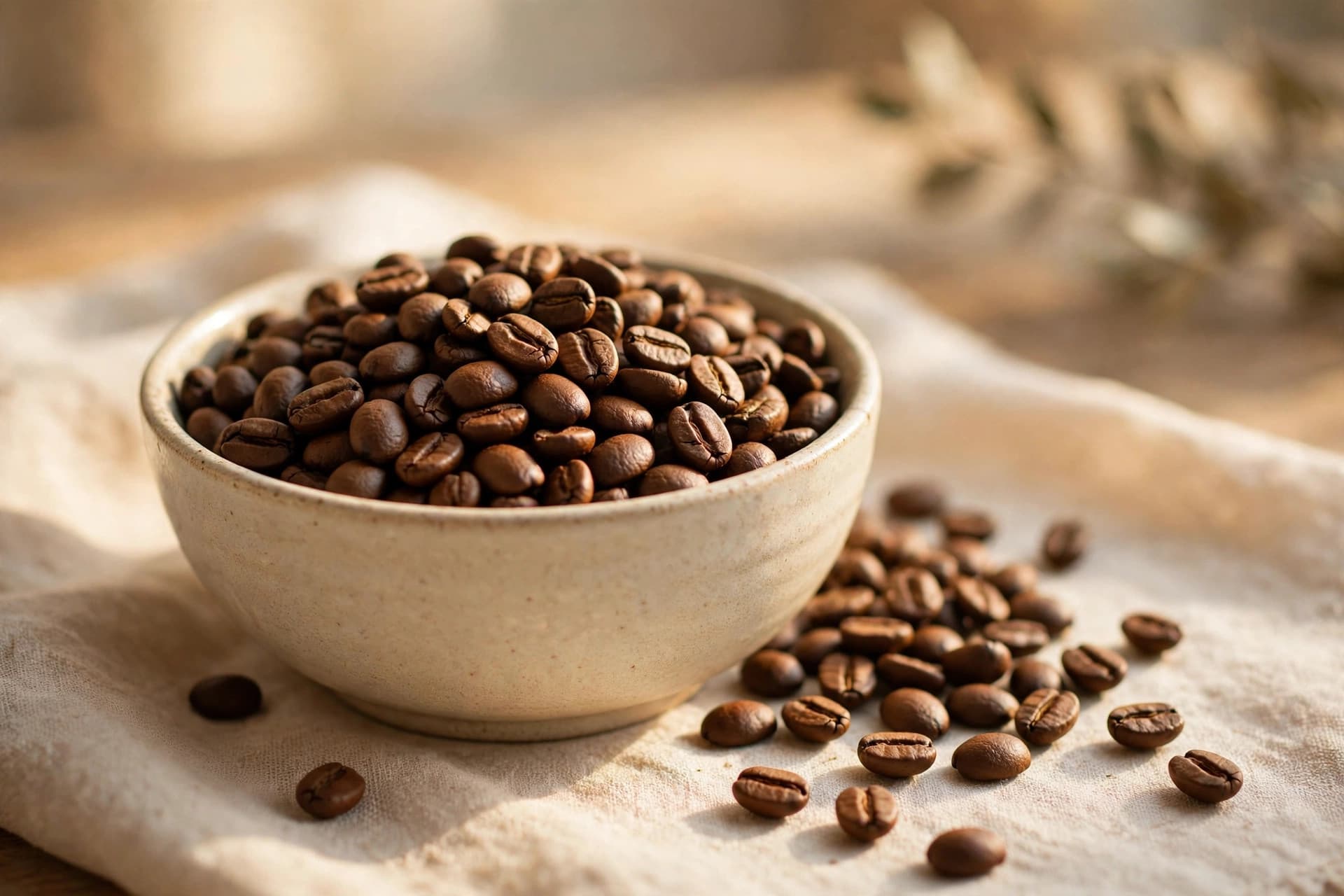
Tasting decaf requires, above all, a change of mind. Do not begin by searching for what is absent. Begin with the same three plain questions applied to every coffee. First, is the aroma pleasing? A good decaf should smell like coffee — warm and inviting, not flat or papery. Second, what is the broad feeling of the cup? Is it sweet and easy, lively, full and steady? Any of these may be right, provided the cup feels balanced. Third, does the flavor remain pleasant after swallowing, or does it turn harsh? A good finish is the mark of a well-brewed cup.
When a decaf cup falters, the same two diagnostic words apply as with any coffee. Sour, sharp, or thin often means under-extraction, meaning the water has drawn too little; a finer grind, hotter water, or a longer brew time may help. Bitter, dry, or harsh often means over-extraction, meaning the water has drawn too much; a coarser grind, slightly cooler water, or a shorter brew time may help. Change one thing at a time, taste the change, and then decide the next step. A neglected brewer can also ruin a good decaf, so clean equipment regularly.
When, then, is decaf the right choice? Whenever the drinker desires coffee flavor and a proper coffee ritual, without caffeine being the point of the cup. Evenings offer the clearest example: a quiet cup after dinner, brewed slowly, can be a fitting close to the day. It also serves well as a second cup in the afternoon, or as hospitality for a guest who loves coffee but does not wish caffeine late in the day.
To recapitulate: decaf deserves the same care as any coffee. Charles V is the single-source Colombian decaf, and it should be brewed fresh, ground fresh, and tasted on its own terms. Judge decaf by flavor, not by what it is missing.
The coffees in this note
Charles V — Colombia — medium