October 26, 2026
Cold Brew at Home
Cold brew is among the simplest brews a home can make, and among the easiest to get wrong in a small way. Its reputation is well earned: smooth, sweet, and easy to drink. Yet that smoothness is often misunderstood. It does not come from adding sugar; it comes from the method itself. When a cold brew tastes harsh, the remedy usually lies in the grind, the time, or the dilution — not in sweetening it further.
Cold brew is coffee steeped in cool or room-temperature water for a long time, rather than brewed with hot water in minutes. With no heat to hasten extraction, time does the work. That long, gentle steep distinguishes it from iced coffee — hot coffee poured over ice, keeping the brightness and bite of hot brewing. Cold brew, brewed cold from the start, tends to taste rounder, sweeter, and less sharp.
For cold brew, the grind must be coarse — even coarser than for French press, like cracked peppercorns or coarse breadcrumbs, clearly visible and nothing powdery. The reason is duration: sitting in water for many hours, a fine grind would present far too much surface area, drawing out bitter, harsh flavours. A coarse grind slows extraction, so a long steep yields sweetness instead.
A common home range is twelve to sixteen hours, in the refrigerator at 41°F or below. Most of it is waiting: the active work takes only a few minutes — set it up in the evening for the morning, or in the morning for the evening. Time performs a slow, steady labour.
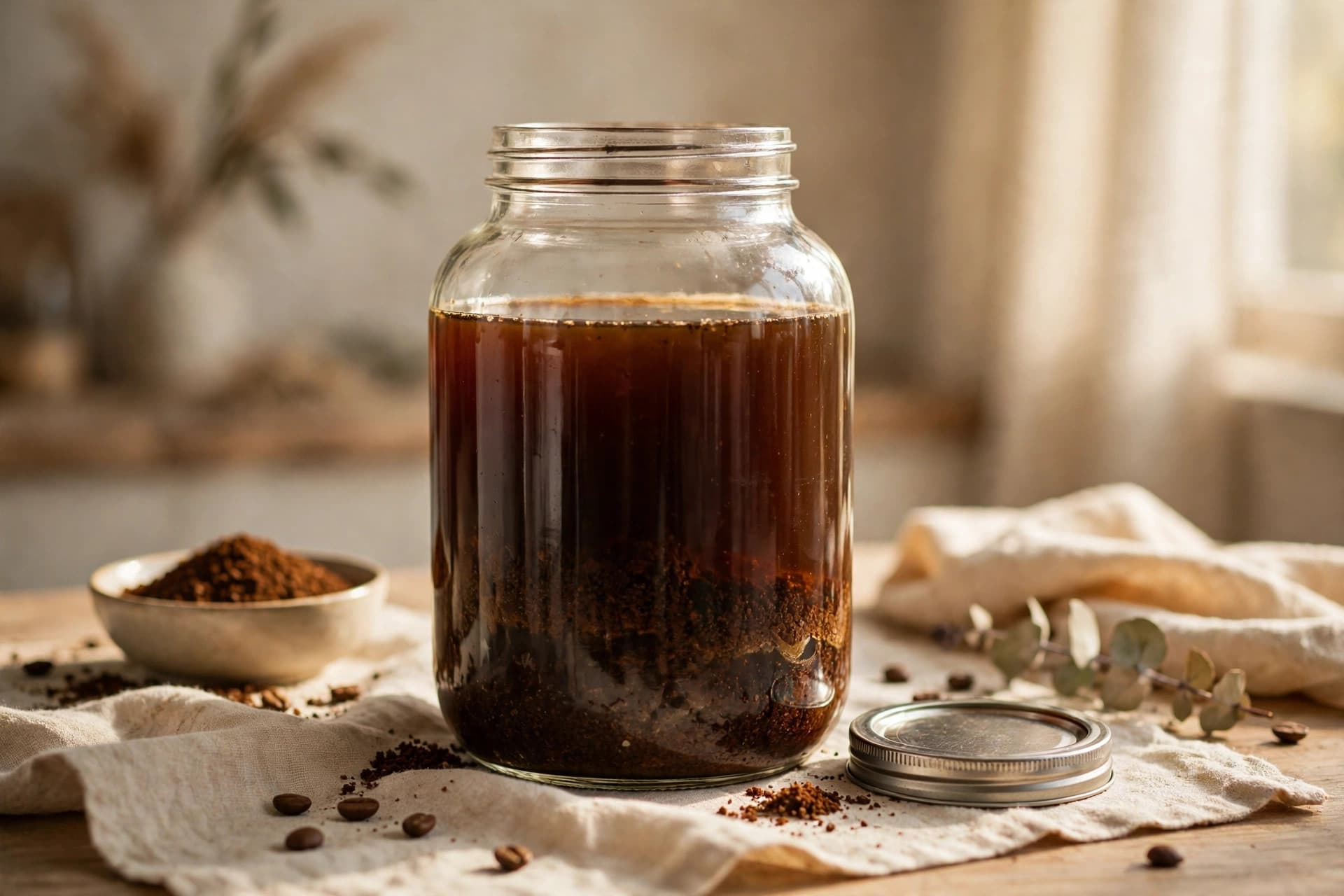
The distinction that confuses most newcomers is between concentrate and ready-to-drink cold brew, and knowing which one has been made changes how it should be served. A concentrate uses a large amount of coffee and less water, so the finished brew is strong and meant to be diluted — usually with an equal amount of water, milk, or melting ice. Drunk straight, it will taste far too strong, and that is not a flaw. It is simply undiluted.
A ready-to-drink cold brew uses a normal coffee-to-water balance, so it can be poured as it is, over ice. It is simpler to serve, but occupies more space, since the full amount of water is steeped from the start. Neither form is superior. Concentrate suits a brewer short on refrigerator space or who likes to adjust strength cup by cup; ready-to-drink suits one who wants to pour and go.
For a simple concentrate, combine fresh whole bean coffee, ground coarse, with cool, clean water in a jar or pitcher. Stir gently, cover, and steep twelve to sixteen hours. Then strain twice: first through a fine mesh strainer, then through a paper filter or clean cloth for a clearer cup. That second strain removes the fine sediment that can make cold brew taste gritty or muddy. For a ready-to-drink version, the steps are the same, but more water is used for the same coffee, so the finished brew is already at drinking strength. Store it covered in the refrigerator.
Freshness still matters here. A long steep will not conceal stale coffee: fresh beans give sweetness, stale beans flatness, however long they steep. At Holy Roastin' Empire, every bag is roasted fresh to order. Use clean, fresh-tasting water as well: cold brew is mostly water, so it shows up in the cup.
For concentrate, begin with equal parts concentrate and water, over ice, and taste — more water if too strong, more concentrate if too weak. Once the preferred balance is found, it repeats easily. For milk drinks, start with concentrate and milk in roughly equal parts, over ice, and adjust to taste. Cold brew with milk can taste naturally sweet, because the method itself brings out sweetness, and many brewers need less sugar than expected, or none at all.

If cold brew tastes bitter or harsh, examine the grind first — was it too fine? — then the time: did it steep much longer than sixteen hours? If sour or thin, it may be under-extracted: confirm enough coffee was used, the grind was not so coarse the water could not reach the flavour, and the steep was given enough time. A few hours cannot do the work of an overnight steep.
If it tastes muddy or gritty, examine the straining; a second strain is the step most often skipped in haste. If flat, examine freshness and storage: keep finished cold brew covered in the refrigerator and drink it within a few days. It keeps longer than hot coffee, but not indefinitely. Since it steeps for hours, use a clean container, cover it while it steeps, and refrigerate the finished brew.
Try cold brew with a simple jar and strainer: set it up tonight, strain it tomorrow, and taste it before adding anything. The takeaway may surprise the brewer who reaches for sugar first: the long, cool steep, the coarse grind, and the correct dilution are what make cold brew smooth. Sugar remains an option, but it is not what makes cold brew work.