October 31, 2026
Buying and Storing Beans
Freshness is not a single purchase. It is a habit, a small rhythm repeated, and it exerts more influence upon the daily cup than almost any piece of equipment. The Romans prized the discipline of supply — grain kept sound, stores replenished in season, nothing left to spoil in the warehouse — and the home brewer's pantry deserves the same orderly attention. Coffee is at its best in the weeks after roasting, not months later. Roasting creates the flavours one loves, and from that moment those flavours slowly fade. They do not vanish overnight, but they do diminish, and the longer beans sit, the flatter and duller the cup becomes.
The first instrument of this discipline is the roast date. A roast date states when the coffee was actually roasted. A best-by date generally concerns expected quality, not safety, and does not tell you when the coffee was roasted. When shopping, look for the roast date first. A bag bearing no roast date does not tell you how long it has been since roasting. Such coffee may still be brewed, but one should not expect the lively, sweet cup that freshly roasted beans provide.
At Holy Roastin' Empire, every bag is roasted fresh to order, and this is precisely why the roast date is spoken of so often. The freshness clock begins when the beans are roasted. That gives the brewer the best possible window at home — and it makes sound storage habits count for more, not less.
In general, coffee is wonderful in the first few weeks after roasting, and remains very good for a couple of weeks thereafter if stored well. Beyond that, it does not become undrinkable, but it grows quieter: brightness softens, sweetness dulls, and the cup begins to taste flat.
Hence the takeaway of this essay, stated plainly: buy less, more often. It sounds almost too simple, yet it is the habit that protects freshness better than any container or device. Buy an amount one will finish in a couple of weeks, enjoy it at its best, and then buy again.
The calculation begins with honest observation of one's own drinking pace. A person brewing one mug a day will find a small bag lasts a couple of weeks. A household brewing a full pot each morning will pass through more, and a larger bag is sensible. The point is not the size of the bag; it is matching the bag to one's real consumption, so that the last cup is nearly as fresh as the first.
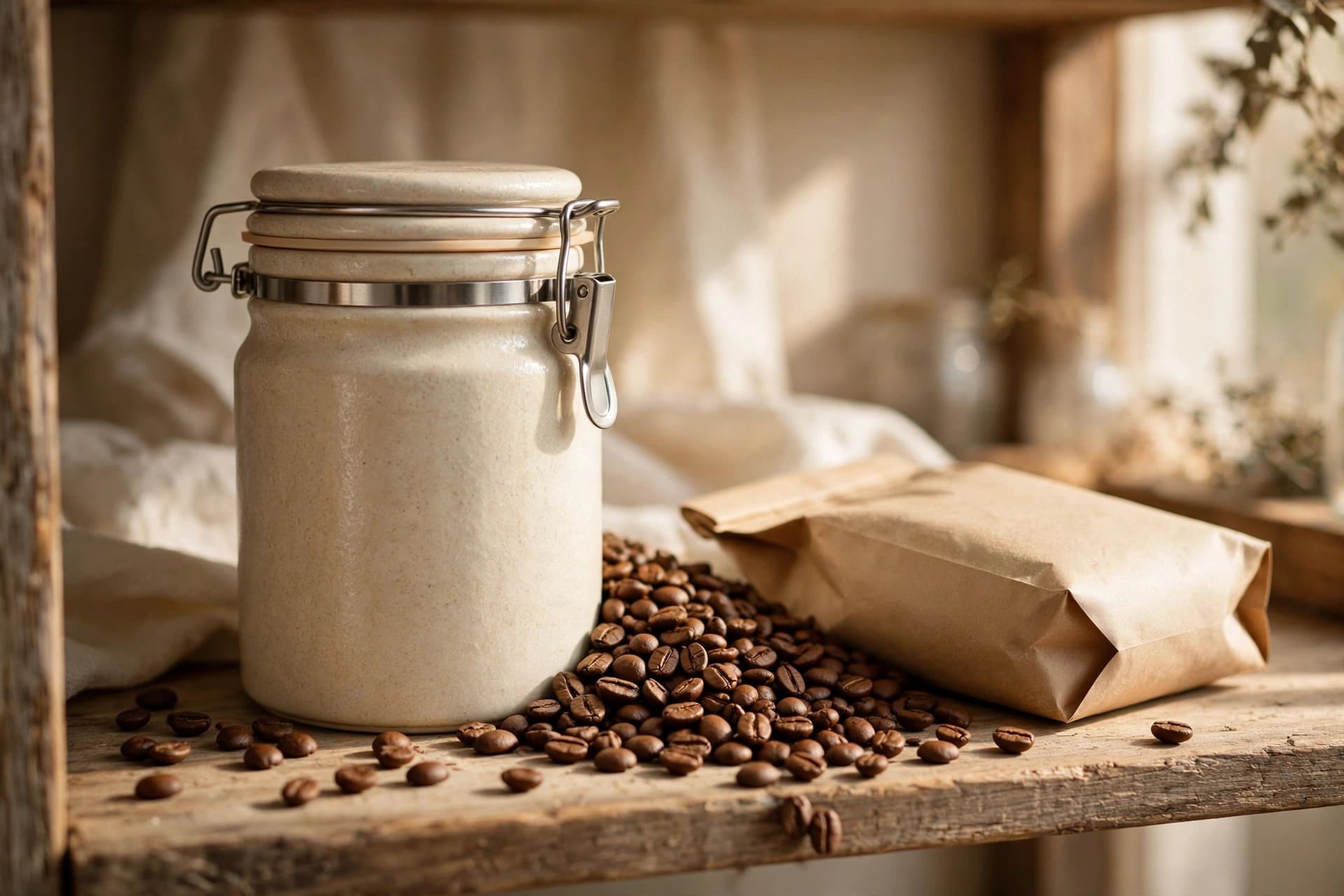
The question of whole bean versus pre-ground follows naturally. Whenever possible, buy whole bean. Whole beans guard their flavour far better than ground coffee, because grinding exposes a vast surface area to air. Once ground, coffee loses aroma quickly — in days rather than weeks — while whole beans retain their flavour much longer. Pre-ground coffee is not forbidden; without a grinder, it can still produce a good cup, particularly if freshly roasted and freshly ground. In that case, buy smaller amounts, use them sooner, and keep the package sealed tightly. When the time comes, a grinder is a worthwhile step, for grinding immediately before brewing is among the finest freshness habits there is.
Storage itself is governed by four enemies: air, light, heat, and moisture. Keep beans from all four, and they will remain good for longer. Air is the greatest enemy: oxygen slowly steals aroma and sweetness, so store beans in an airtight container — a jar with a sound seal, or a bag that seals tightly after the air has been pressed out — and close it properly every time, not merely the first. Light fades flavour over time, so keep beans in a cool, dark place; a kitchen cupboard, away from the stove and a sunny window, is ideal. Heat accelerates staling, so beans should not rest atop the refrigerator, beside the oven, or upon a sunny counter. Moisture can render beans stale and papery and make grinding uneven, so use dry hands, a dry scoop, and a dry container.
The household routine, assembled, is straightforward. When a fresh bag arrives, keep it sealed until needed. Once opened, transfer the beans to an airtight container if the bag does not seal well, or seal the bag tightly after each use. Store that container in a cool, dark cupboard. Grind only what is needed, immediately before brewing. Aim to finish the bag within a couple of weeks.
When choosing beans, the counsel is brief: check the roast date, choose whole bean when possible, and choose an amount suited to one's drinking pace. When trying a new coffee, a smaller bag is wise. Resist the temptation to stockpile a favourite: a fresh bag, ordered when needed, will taste better than a cupboard full of older bags.
Buy less, more often. Freshness is a habit, not a purchase — the quiet Roman virtue of stewardship applied to the morning cup.