October 27, 2026
AeroPress and Moka Pot
For the brewer who loves strong coffee but does not want to buy a large, expensive espresso machine, two small, affordable brewers answer the need: the AeroPress and the moka pot. They are very different tools and make very different cups. The choice is this discussion's takeaway: AeroPress for clean and flexible, the moka pot for rich and bold. Once that distinction is clear, the rest is simply learning each brewer well.
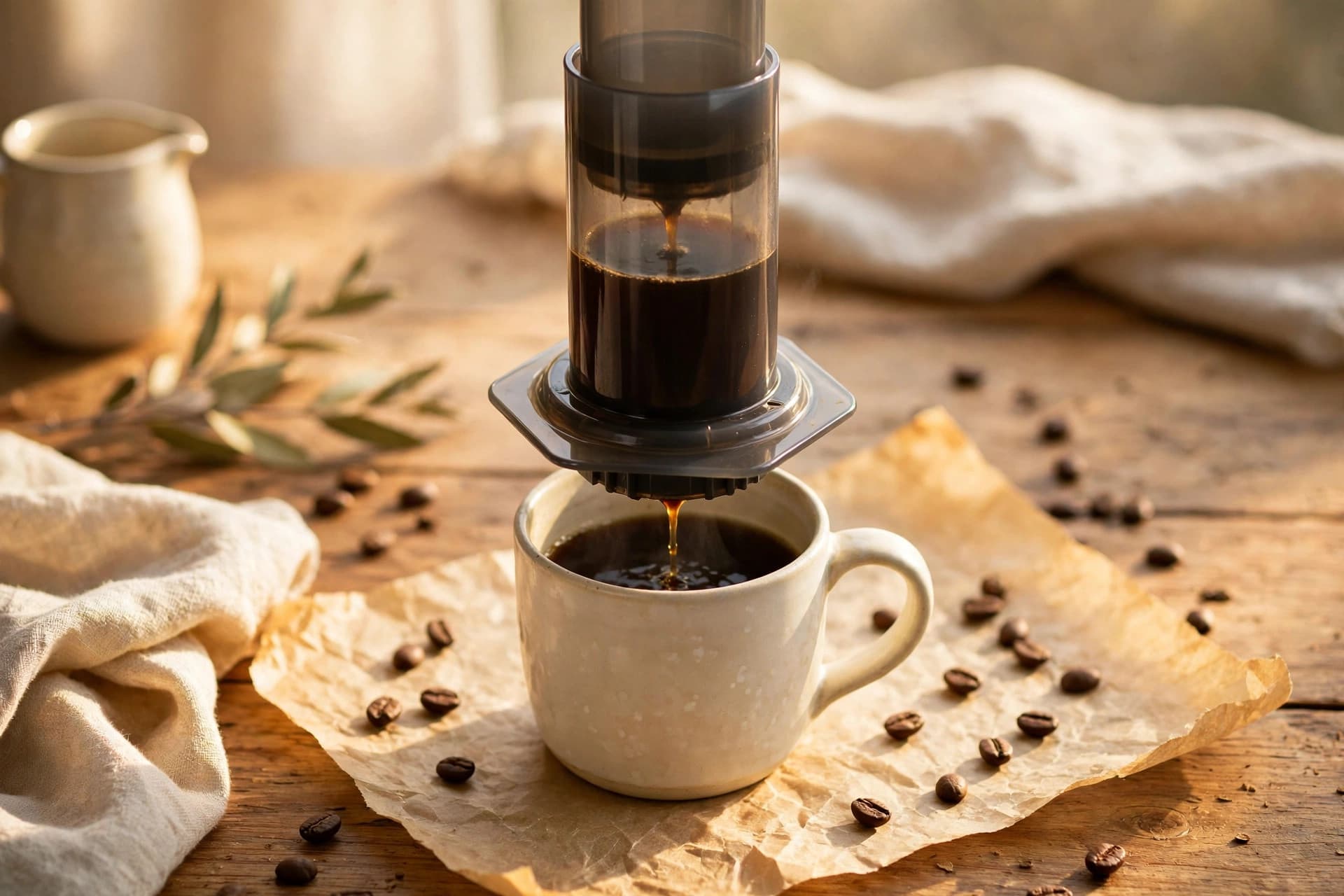
The AeroPress is a plastic tube with a plunger, a filter cap, and a paper filter. Ground coffee and hot water are placed in the tube, stirred, left briefly, and pressed into a mug. Small, light, and easy to clean, it suits travel, small kitchens, and one cup at a time, and the paper filter catches fine grounds and much sediment, so the cup is clean.
A good starting grind is fine to medium-fine — finer than for drip, but not as fine as espresso powder. Water should be just below boiling, around 200 degrees Fahrenheit, or a little cooler for a gentler cup. A simple method: rinse the filter in the cap and attach it, add about two tablespoons of ground coffee, pour in hot water, stir gently, and steep one to two minutes. Then press slowly until a gentle hiss is heard near the end. Stop there: pressing further will only squeeze out bitterness.
The result is a strong, clean cup, adjustable in easy ways: add hot water for something like an Americano, drink it as it is for a short, strong cup, or add milk. That flexibility is the AeroPress advantage — change the grind, steep time, or water added at the end, and a noticeably different cup follows, without any new purchase. It rewards experiment.
If a cup tastes bitter, try a shorter steep or slightly cooler water. If sour or thin, try a finer grind, a longer steep, or more coffee. Cleaning is simple: unscrew the cap, push the puck out, rinse, and the work is done in under a minute.
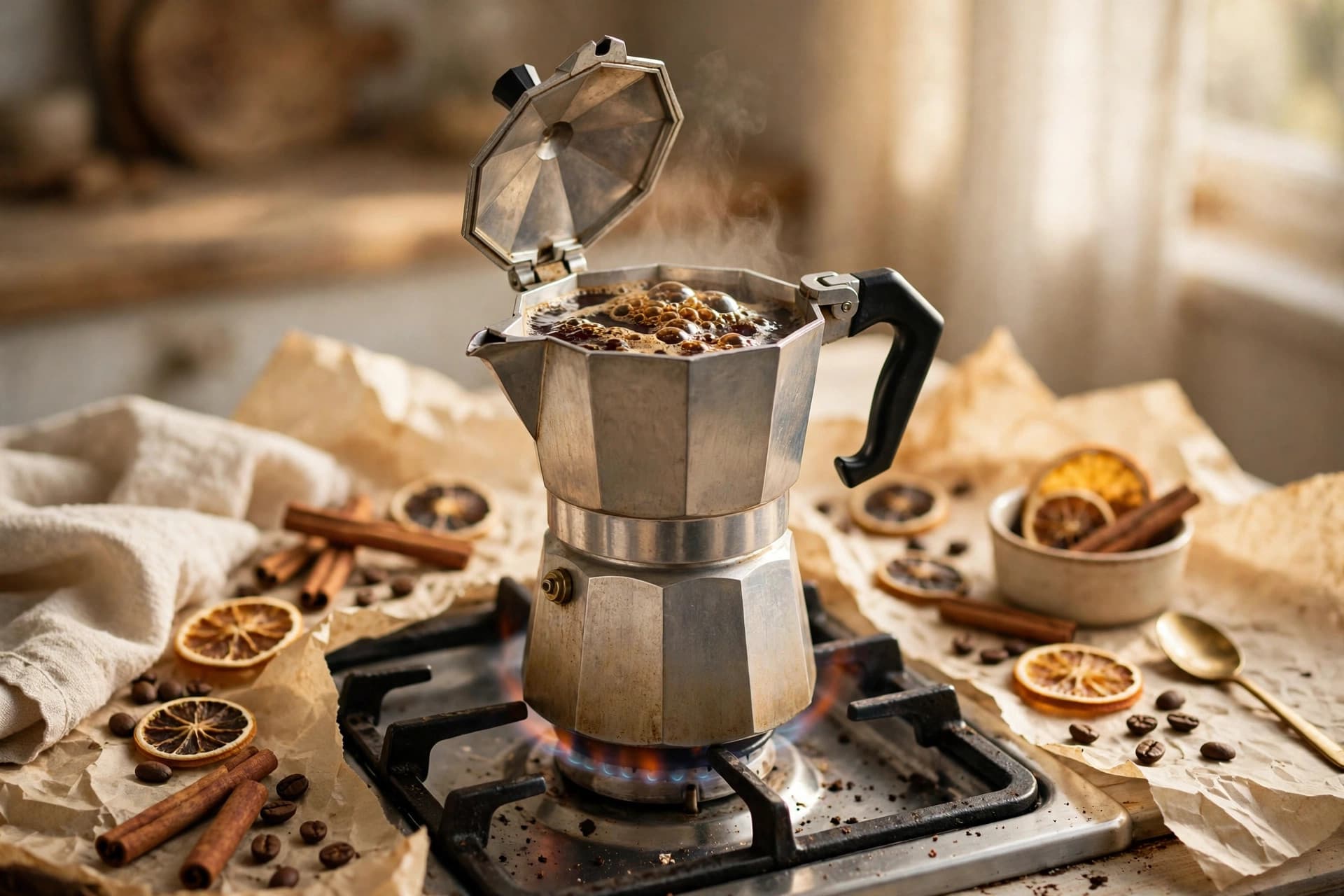
The moka pot is a small metal pot, usually aluminium or stainless steel, in three parts: a bottom chamber for water, a middle basket for coffee, and a top chamber where the brewed coffee collects. It works by heat and pressure: as the water below heats, steam pushes it up through the grounds, and the coffee bubbles into the top chamber. It is a classic Italian home brewer, present on stovetops for generations.
Use a fine grind, but not espresso-fine — a little coarser than powdered sugar, about fine sand. Too fine, and the water struggles through, leaving the coffee bitter and burnt. Too coarse, and it rushes through, leaving the cup thin.
Fill the bottom chamber with hot water up to just below the safety valve, never above it. Fill the basket loosely, level it off, and do not tamp it hard as for espresso — packing it tight will choke it. Screw the top on firmly, place the pot on medium heat, and leave the lid open. At first, nothing happens. Then the coffee bubbles up steadily. When it sputters and gurgles and the stream turns pale, remove it from the heat at once: leaving it on while it sputters will scorch the coffee. Run the base under cool water if desired, and pour right away.
What the moka pot yields is rich and bold, with a heavier body than an AeroPress cup and a more intense, roasty flavour. It is not true espresso, for it does not reach espresso pressure, but it is strong, concentrated coffee that stands up beautifully to milk — a satisfying middle ground for cappuccinos or lattes at home without a café machine.
If it tastes bitter, examine the heat first: medium heat, and off the heat at the first sputter, corrects most bitter cups. Also check the grind and that the basket was not packed too tightly. If weak or watery, confirm the basket was filled fully and the grind was not too coarse. For cleaning, rinse with plain water after each use and let it dry fully; avoid soap inside when possible, and do not leave old grounds in the basket.
Set side by side, the contrast is clear. The AeroPress is lighter, easier to clean, and more flexible, suiting the brewer who experiments, brews one cup at a time, and travels. The moka pot is sturdier, makes a few cups at once, and gives a rich, bold, traditional cup — a small daily ritual for the brewer who loves strong coffee, makes coffee for two or three, or values the stovetop ceremony.
Both are affordable, both fit in a small kitchen, and both make coffee far stronger than many expect from such simple tools. There is no need to choose one for all time; many brewers keep both, reaching for one or the other by the morning. Freshness underlies both methods. At Holy Roastin' Empire, every bag is roasted fresh to order, and fresh beans, ground just before brewing, taste livelier in either brewer than stale coffee. If choosing just one, return to the takeaway: AeroPress for clean and flexible, moka pot for rich and bold. Let taste decide.